


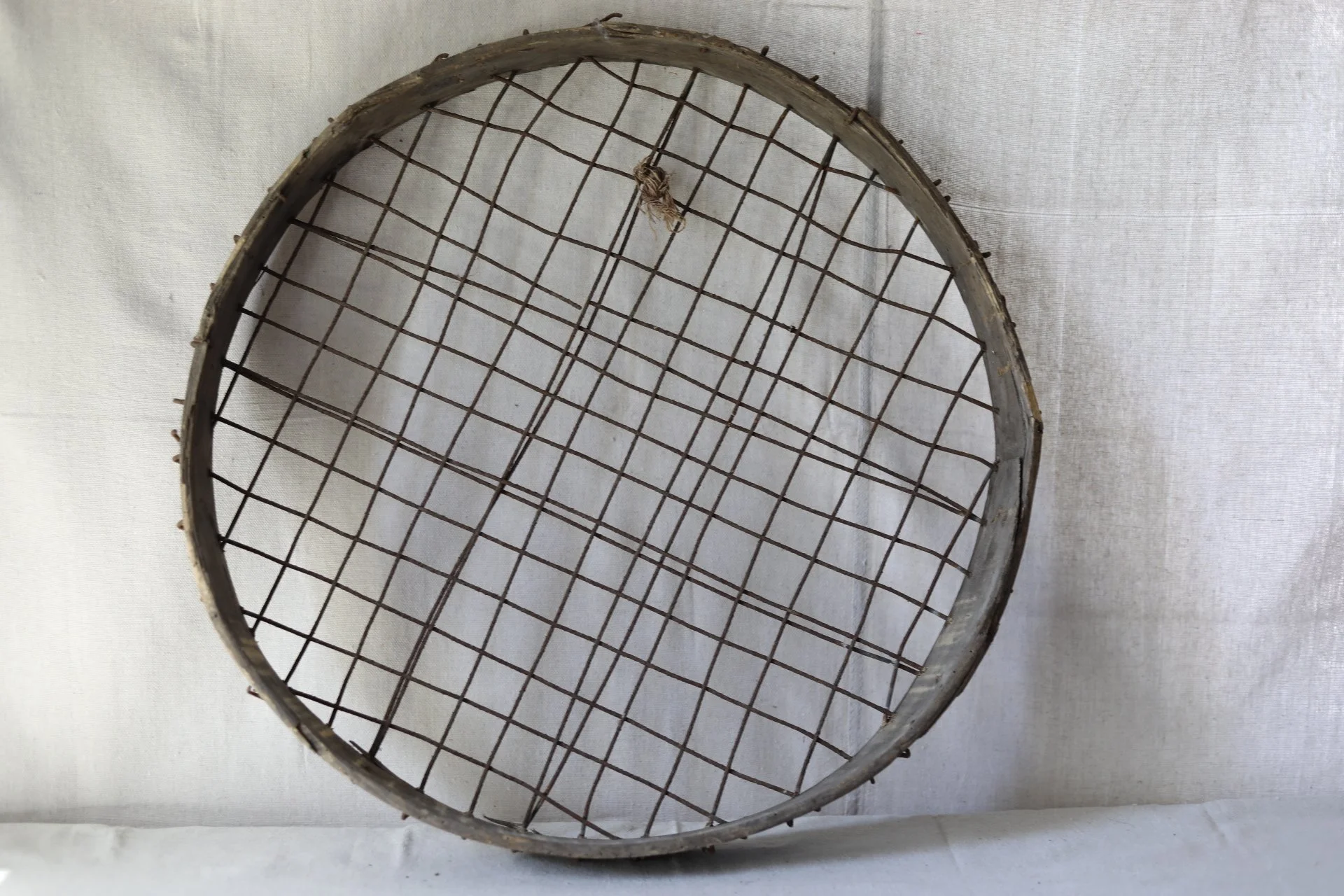
Origin: England
Period: Circa 1880-1920
Material: Wooded rim, hand-set iron mesh
Condition: Wear consistent with age and use.
Dimensions:
England, circa late 19th-early 20th century.
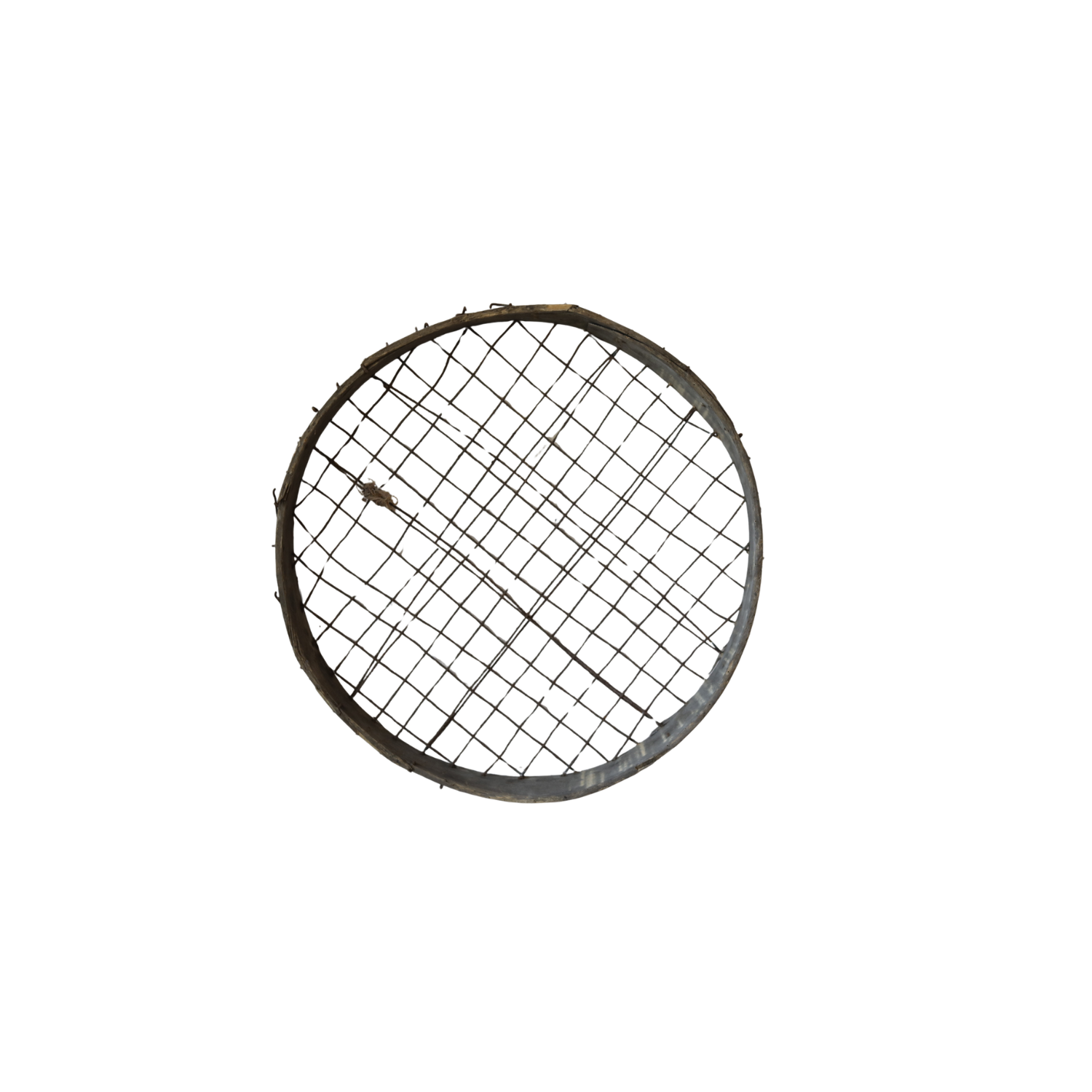
This antique English grain riddle was originally used on farms to sift and clean harvested grain, separating seed from chaff through rhythmic hand-shaking. Constructed with a steam-bent wooden rim and hand-set iron wire mesh, it reflects the honest craftsmanship of rural agricultural tools made for daily labor.
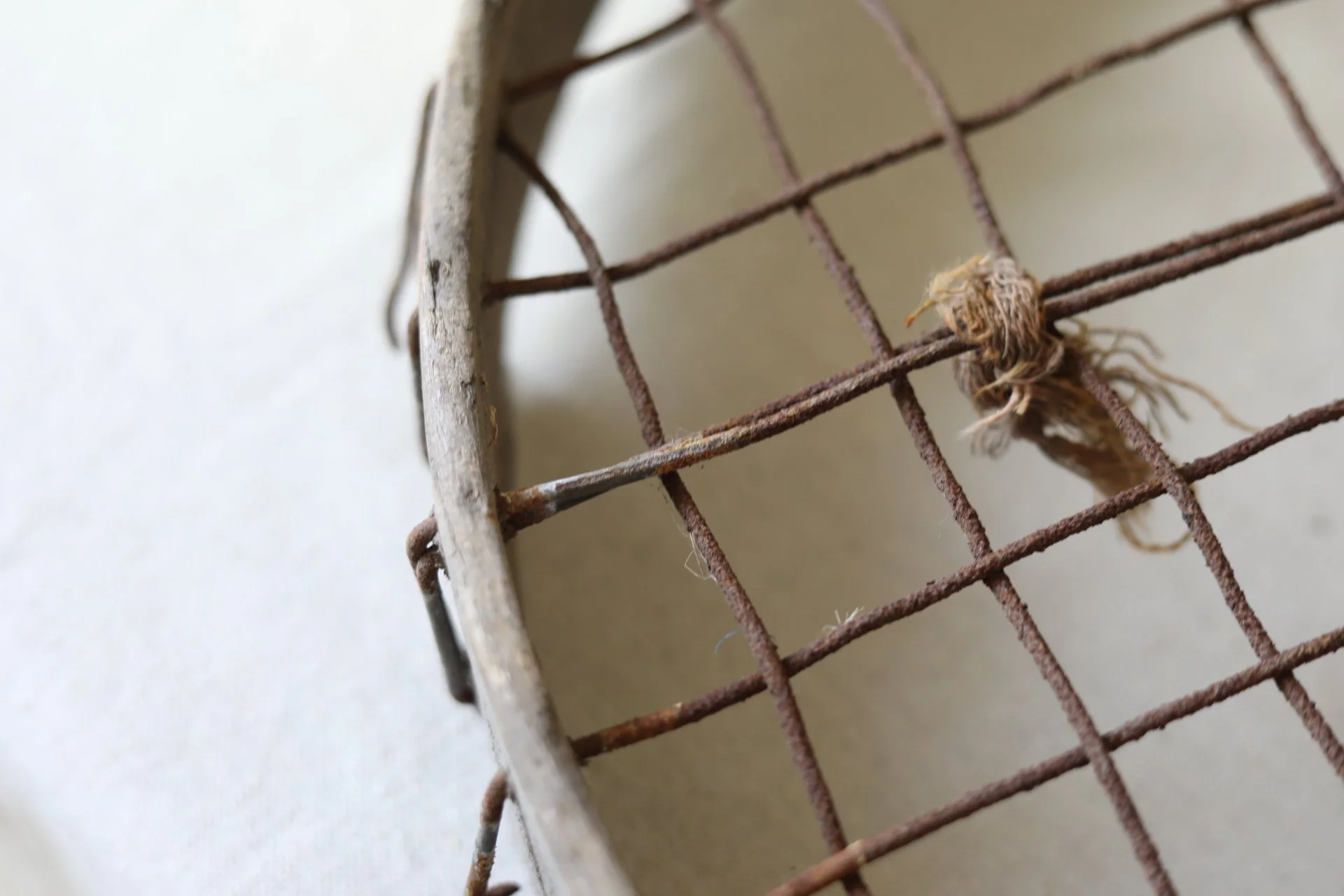
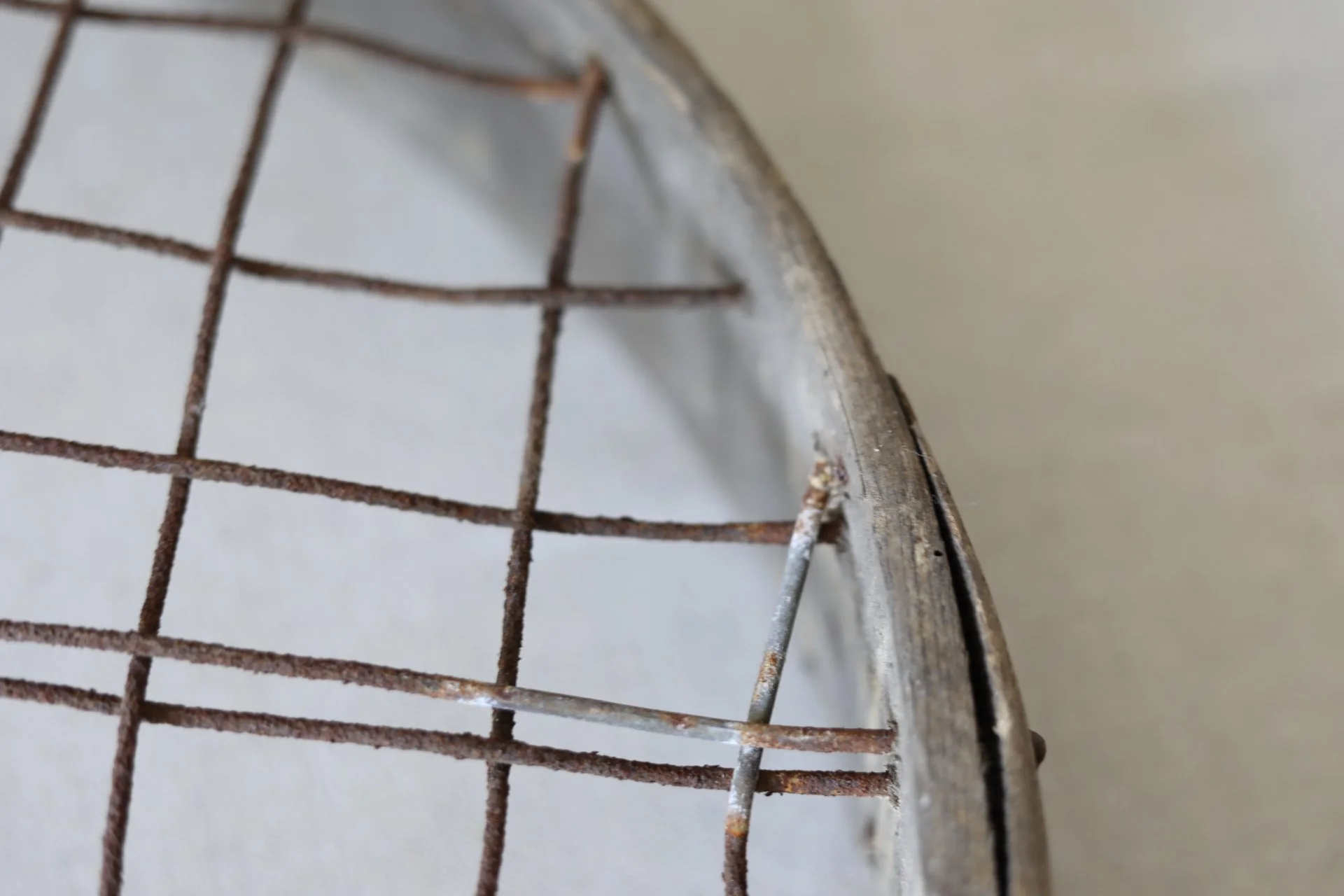
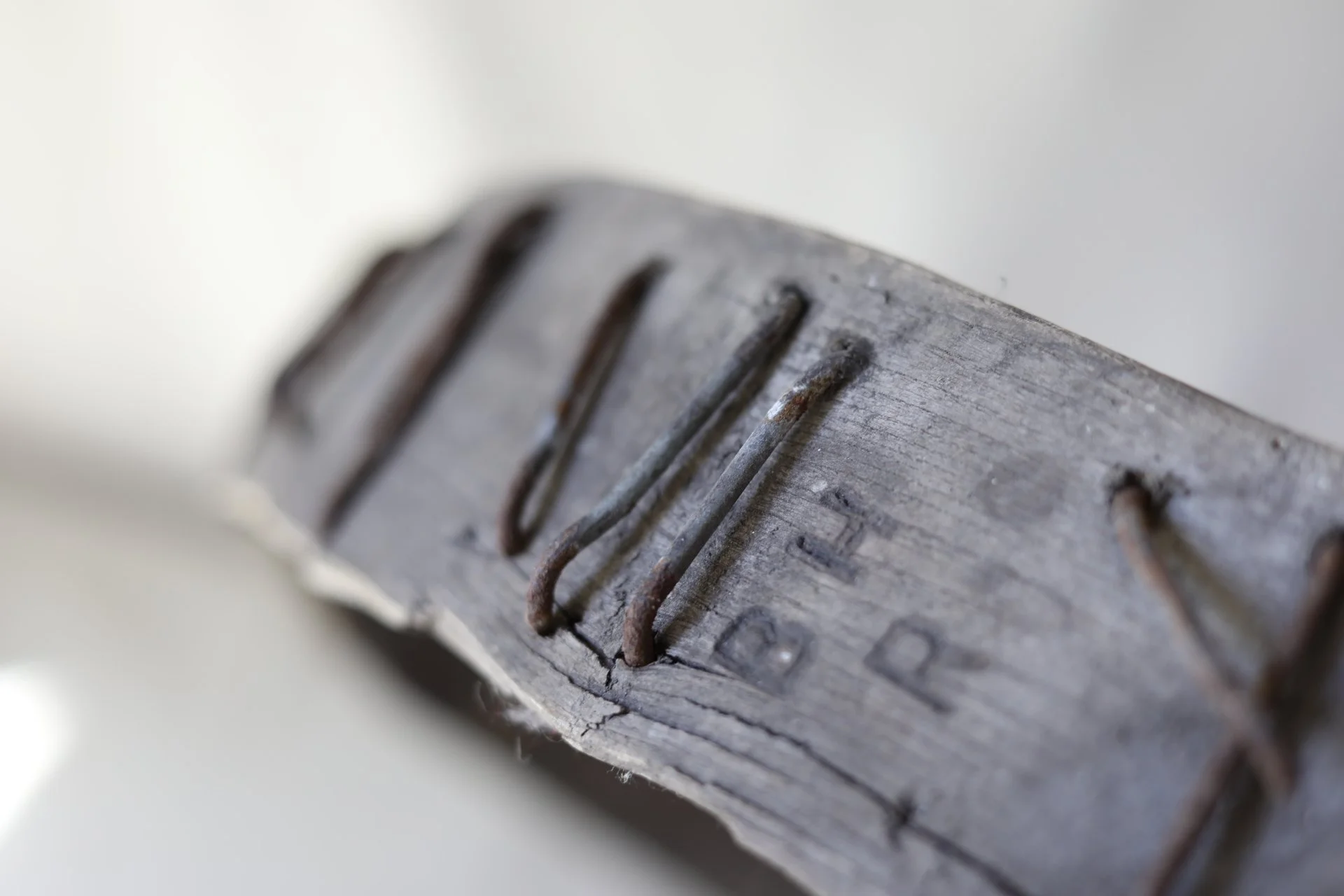
Sourced in Northern England, the riddle shows authentic wear developed through years of use—softened wood, aged metal, and subtle irregularities that speak to its working past. Once a utilitarian necessity, it now functions beautifully as a sculptural wall object or textural accent in layered interiors.
A striking example of English agricultural history, preserved not as it was made, but as it was used.
Because every good room needs a past.
England, circa late 19th-early 20th century.
This antique English grain riddle was originally used on farms to sift and clean harvested grain, separating seed from chaff through rhythmic hand-shaking. Constructed with a steam-bent wooden rim and hand-set iron wire mesh, it reflects the honest craftsmanship of rural agricultural tools made for daily labor.
Sourced in Northern England, the riddle shows authentic wear developed through years of use—softened wood, aged metal, and subtle irregularities that speak to its working past. Once a utilitarian necessity, it now functions beautifully as a sculptural wall object or textural accent in layered interiors.
A striking example of English agricultural history, preserved not as it was made, but as it was used.
Because every good room needs a past.
Origin: England
Period: Circa 1880-1920
Material: Wooded rim, hand-set iron mesh
Condition: Wear consistent with age and use.
Dimensions: