
Origin: England
Period: Circa late-18th-early 19th century
Material: Hand-carved stone
Condition: Wear and surface variation consistent with age.
Dimensions: 8” diameter, 2” height
England, circa late 18th-early 19th Century.
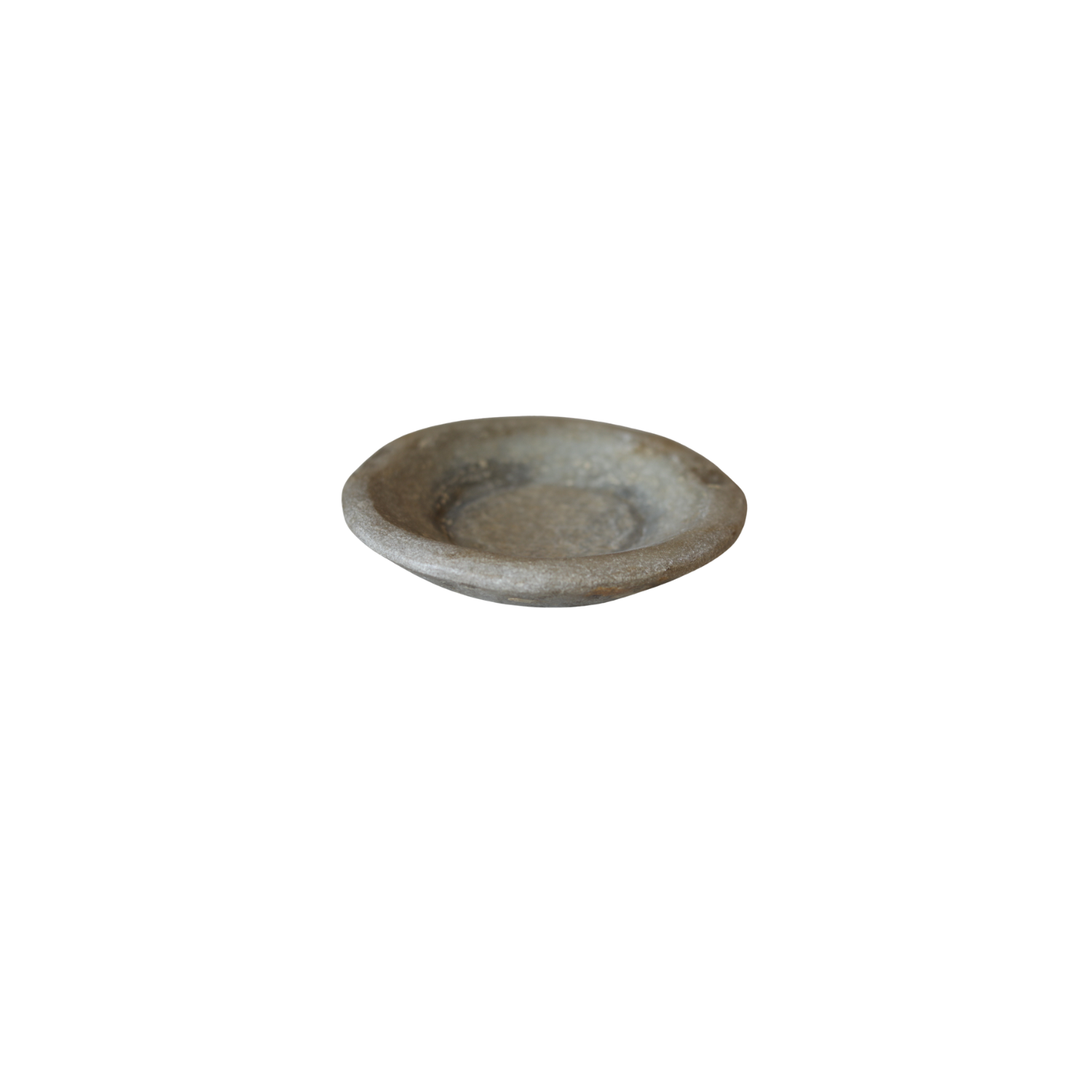
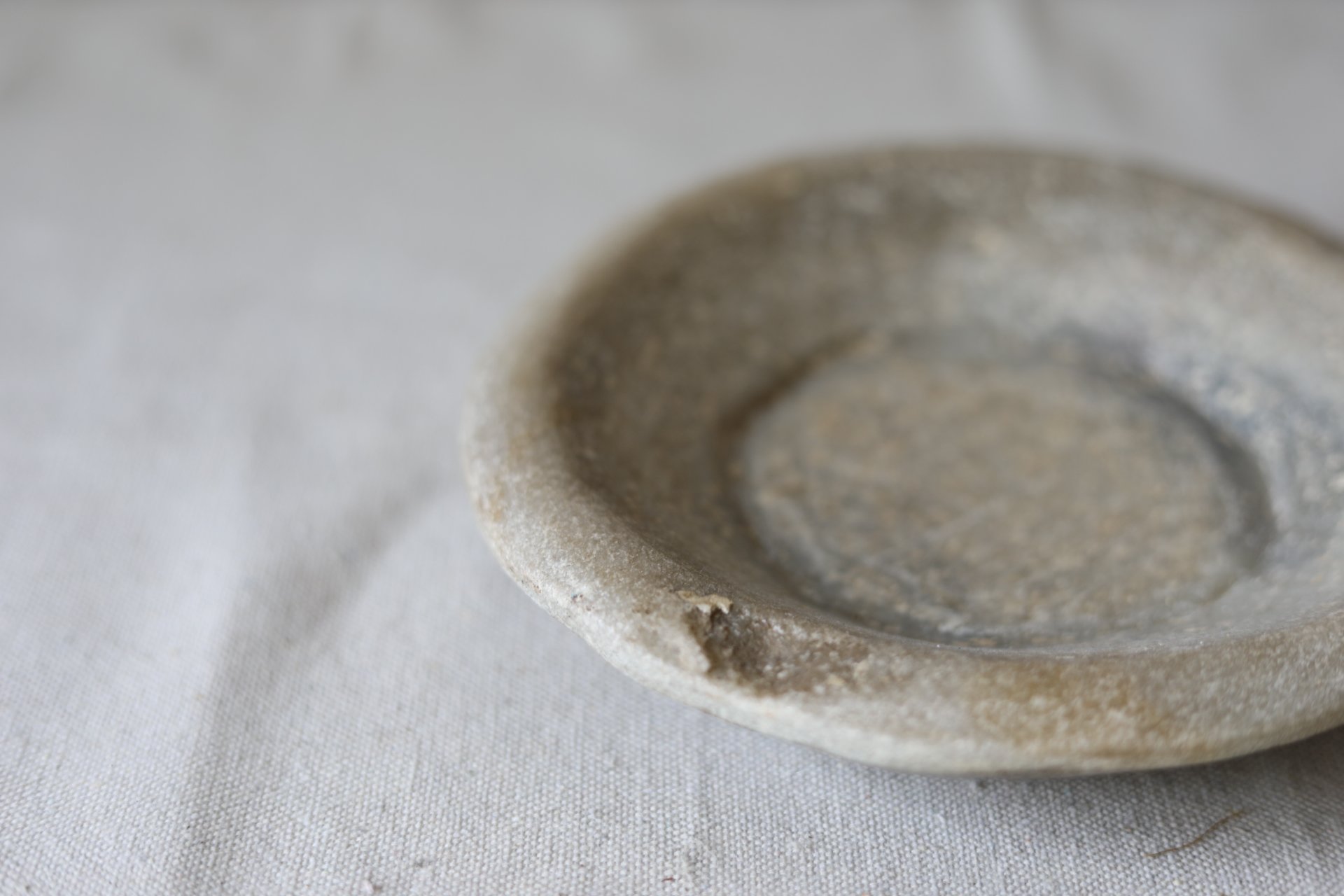
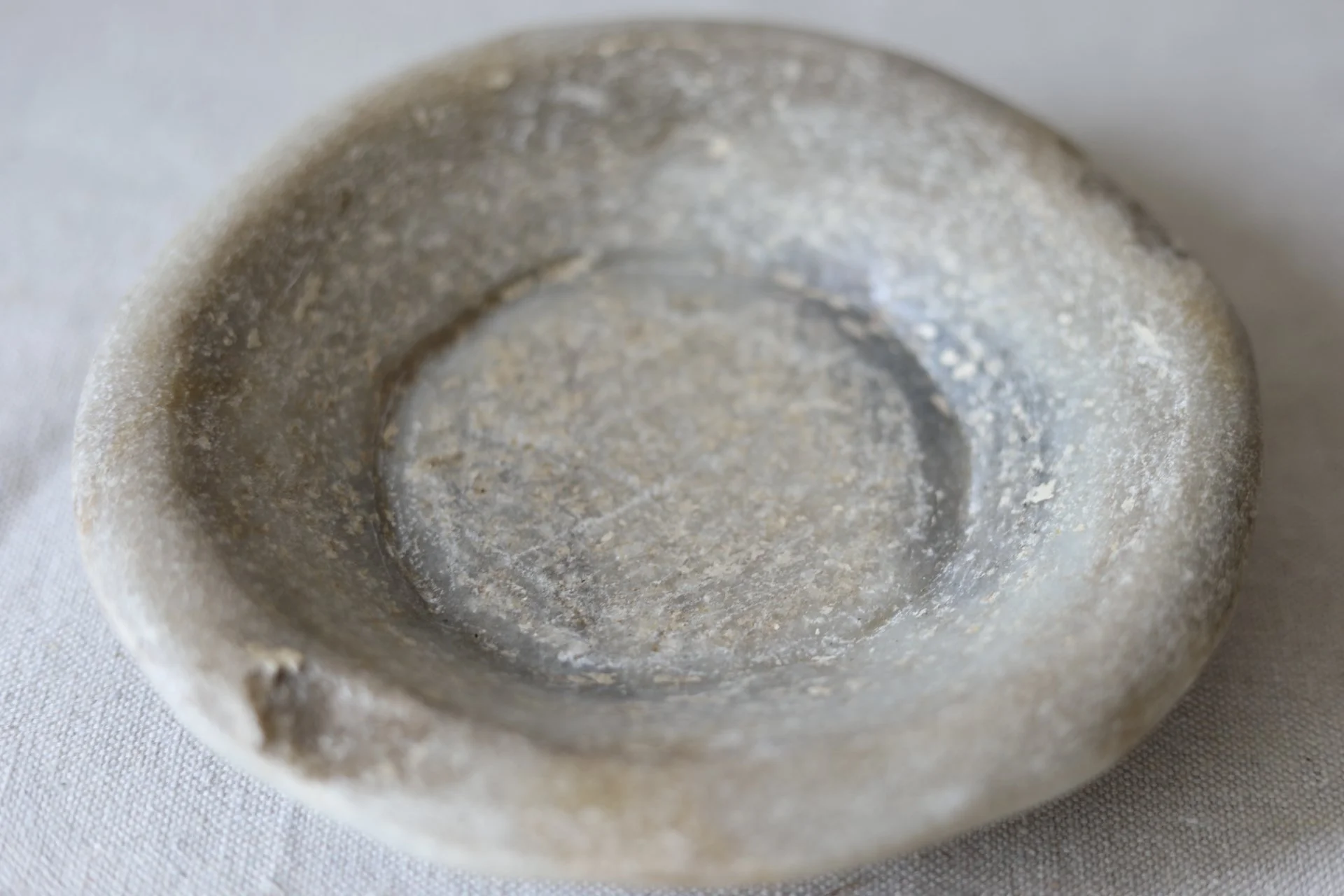
This understated stone bowl was hand-carved in England and dates to the late 18th-early 19th century. Crafted from solid stone, the shallow form and softened rim speak to its original utilitarian purpose—made to be handled, used, and set aside again without ceremony.
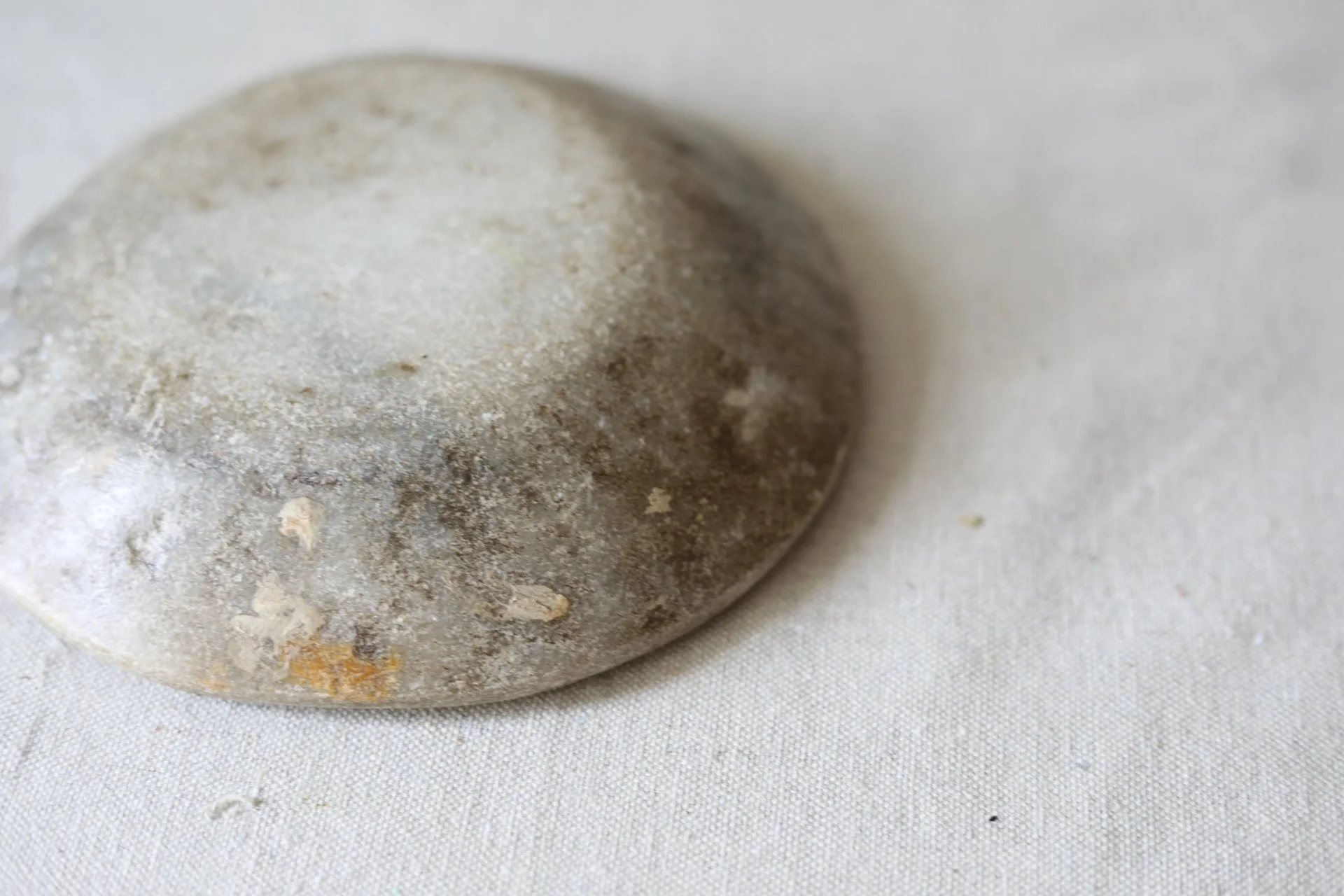
The surfaces bears a beautifully aged patina developed over generations, with subtle variations in tone, texture, and wear that reflect long use rather than ornament. Free from decoration, the bowl’s appeal lies in its restraint and material honesty.
Today, it lends itself effortlessly to decorative use. Placed on a kitchen counter, console, or open shelf, it brings a quiet, grounding presence—equally at home holding small objects or left empty as a sculptural accent.
A timeless object where function and form meet naturally. An object shaped by use, softened by time.
Because every good room needs a past.
England, circa late 18th-early 19th Century.
This understated stone bowl was hand-carved in England and dates to the late 18th-early 19th century. Crafted from solid stone, the shallow form and softened rim speak to its original utilitarian purpose—made to be handled, used, and set aside again without ceremony.
The surfaces bears a beautifully aged patina developed over generations, with subtle variations in tone, texture, and wear that reflect long use rather than ornament. Free from decoration, the bowl’s appeal lies in its restraint and material honesty.
Today, it lends itself effortlessly to decorative use. Placed on a kitchen counter, console, or open shelf, it brings a quiet, grounding presence—equally at home holding small objects or left empty as a sculptural accent.
A timeless object where function and form meet naturally. An object shaped by use, softened by time.
Because every good room needs a past.
Origin: England
Period: Circa late-18th-early 19th century
Material: Hand-carved stone
Condition: Wear and surface variation consistent with age.
Dimensions: 8” diameter, 2” height