
France, circa 1900.
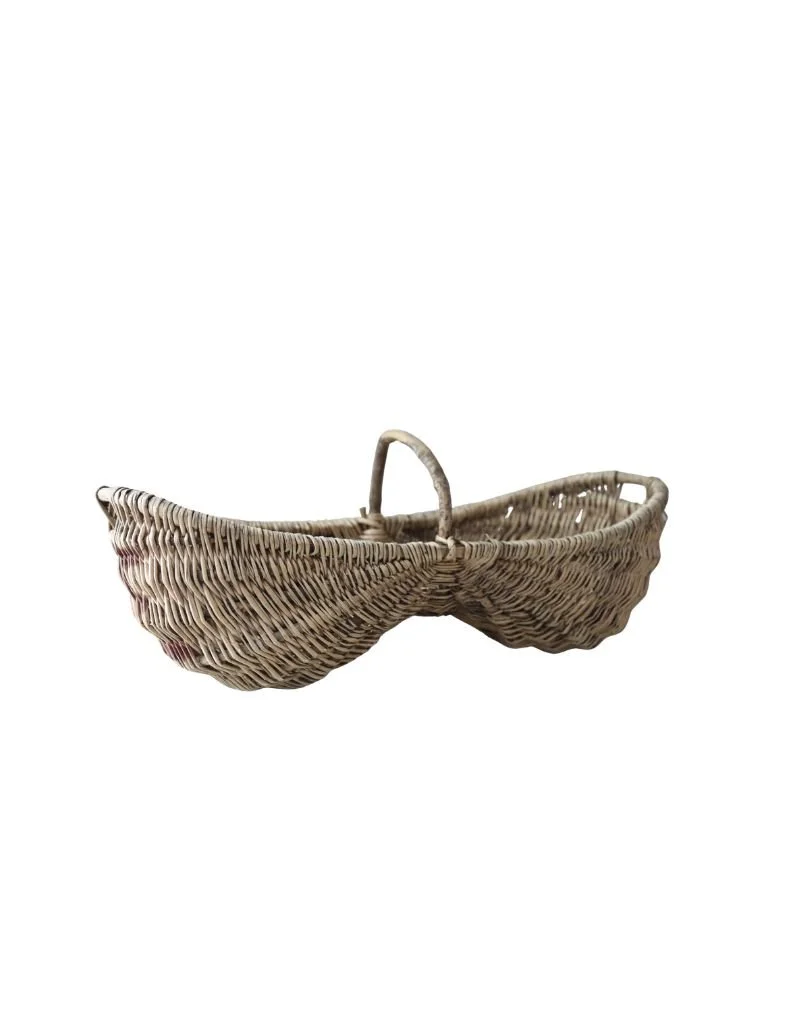
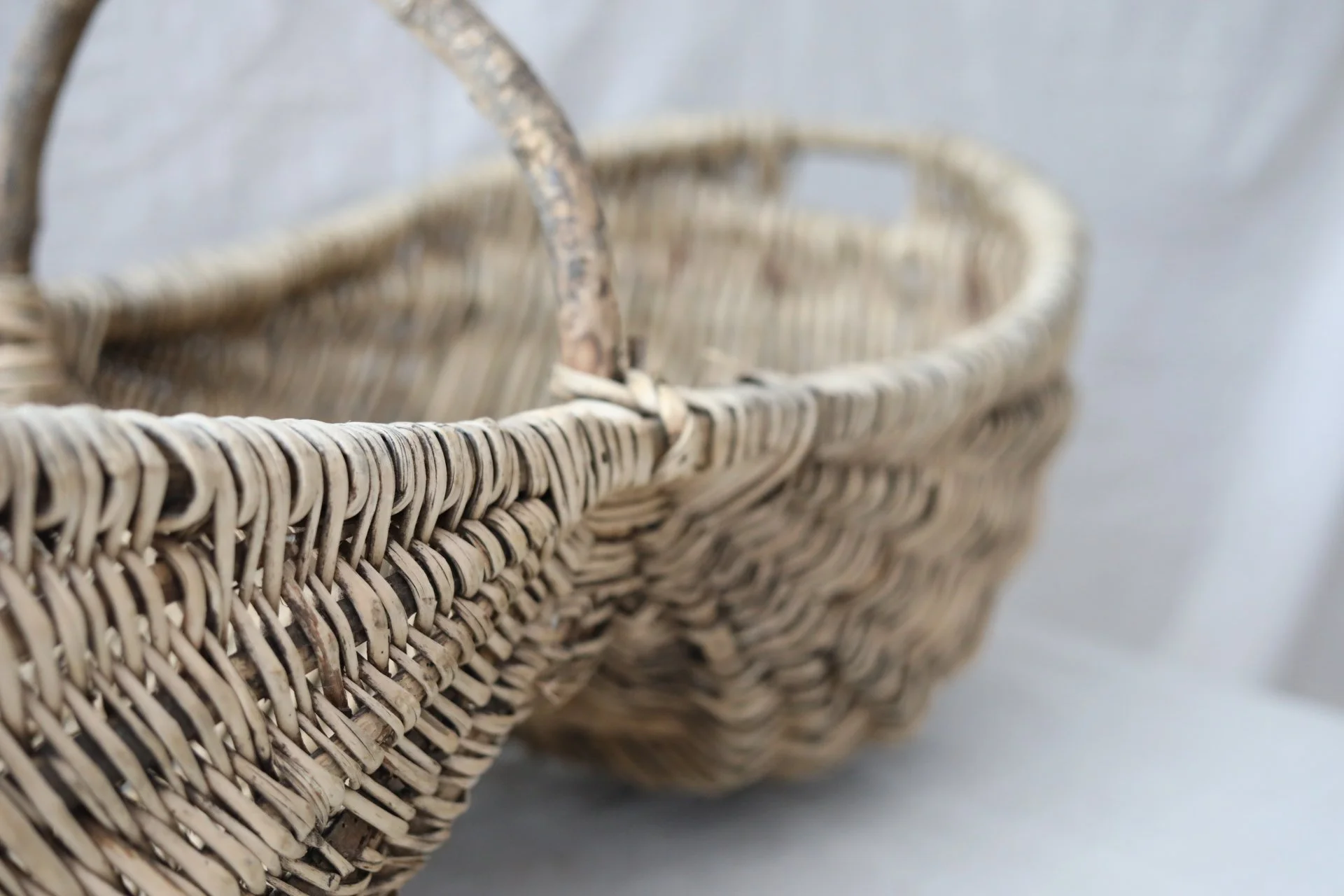
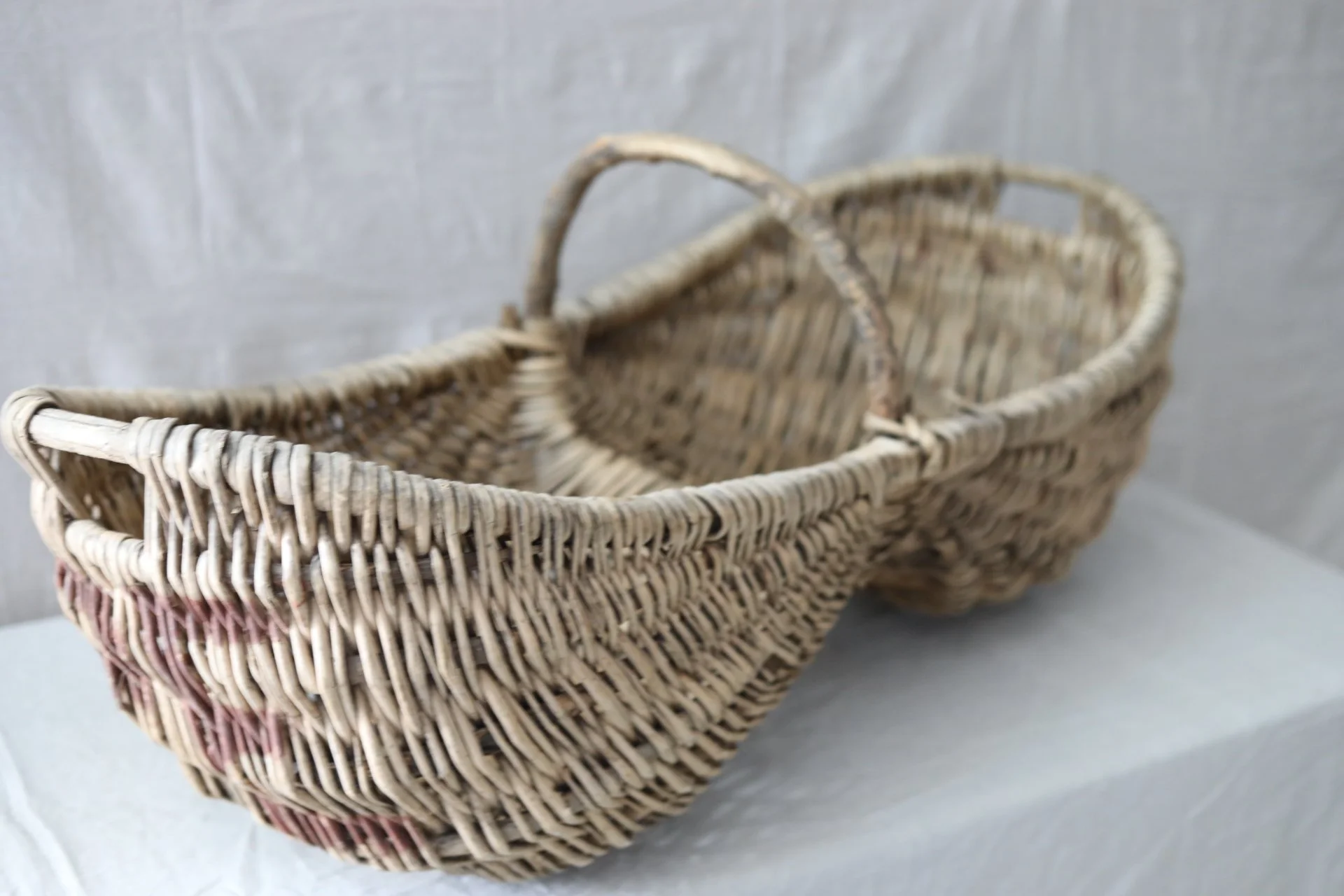
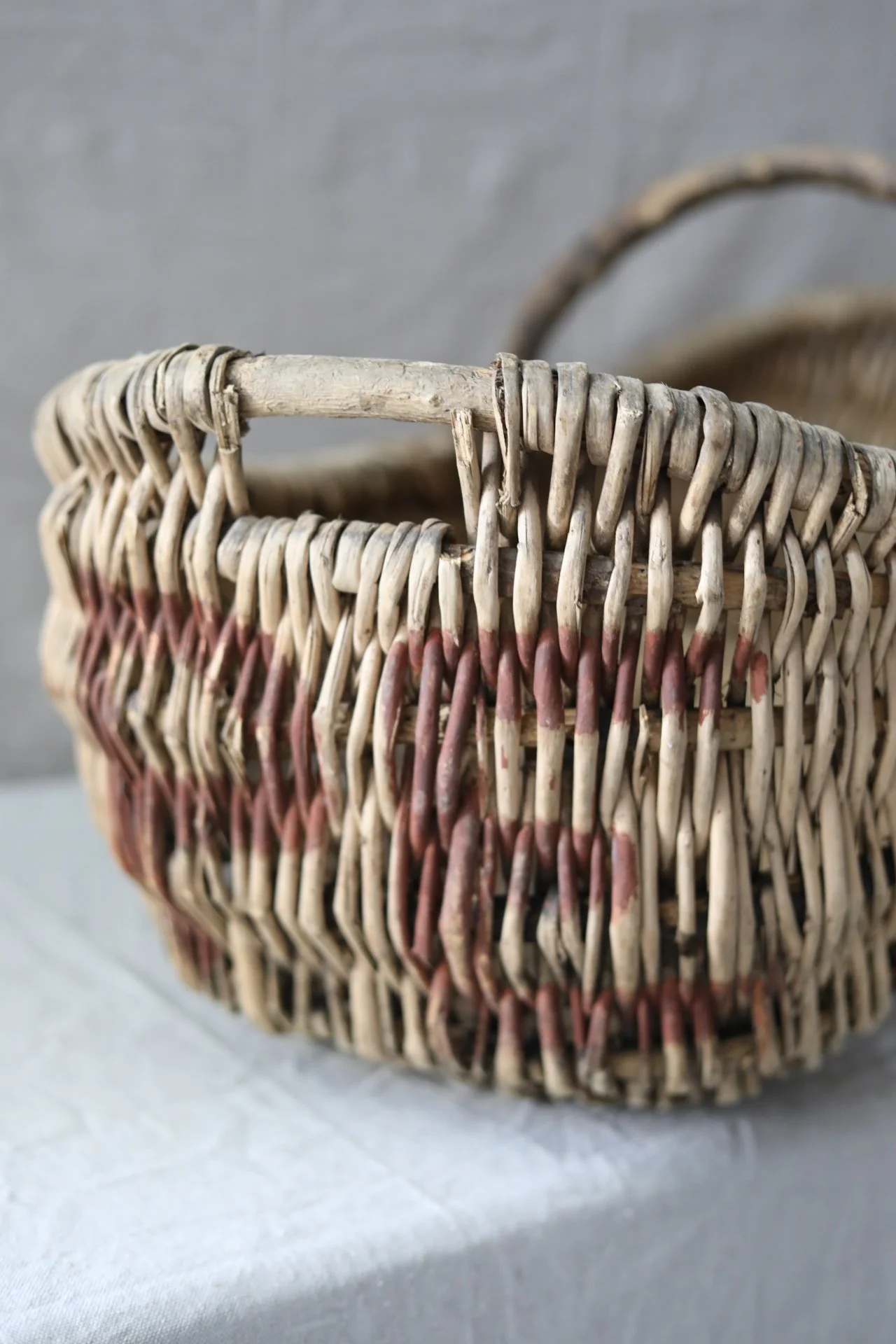
An old French grape-harvest pannier, handwoven in willow and retaining traces of its original red-painted decoration.
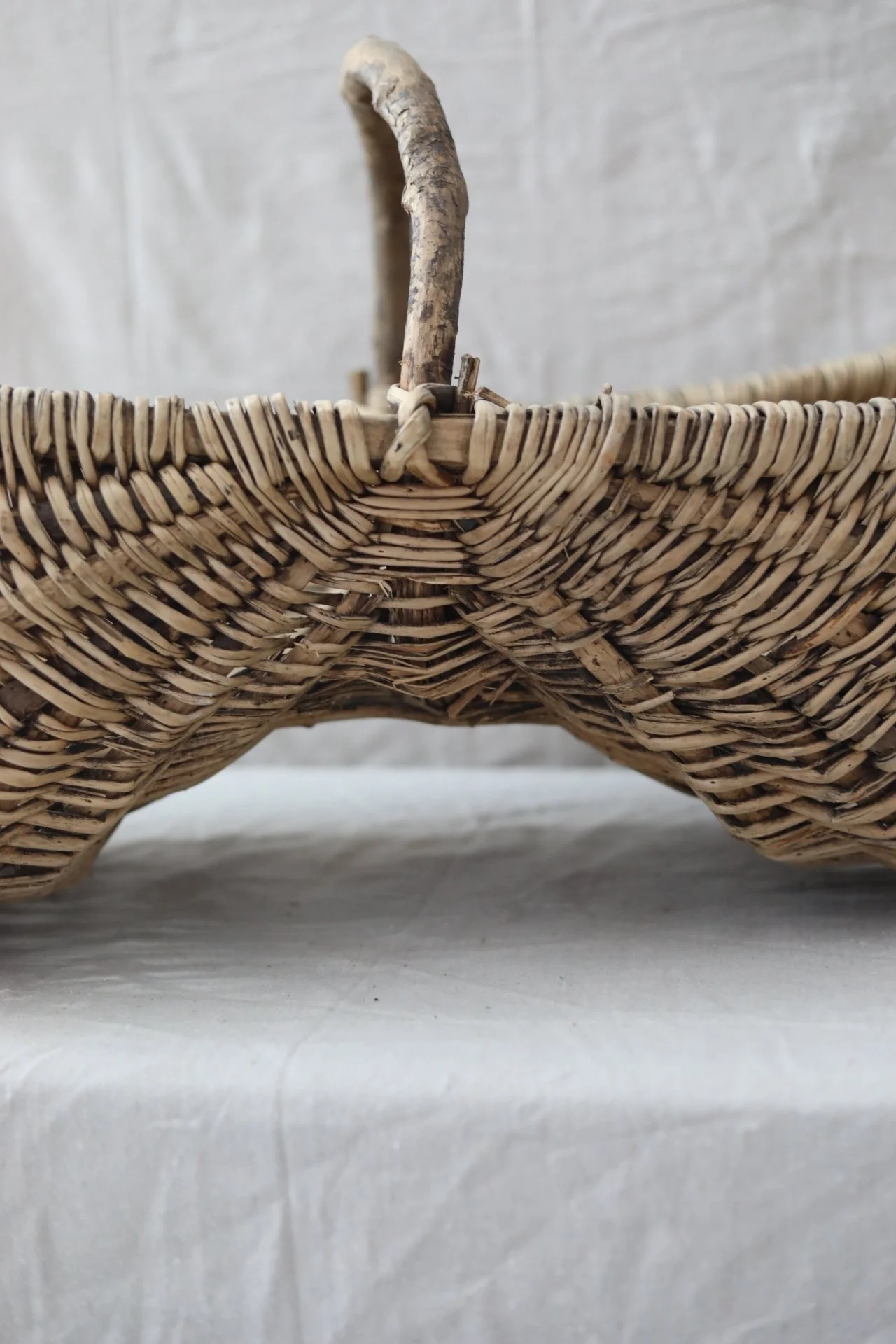
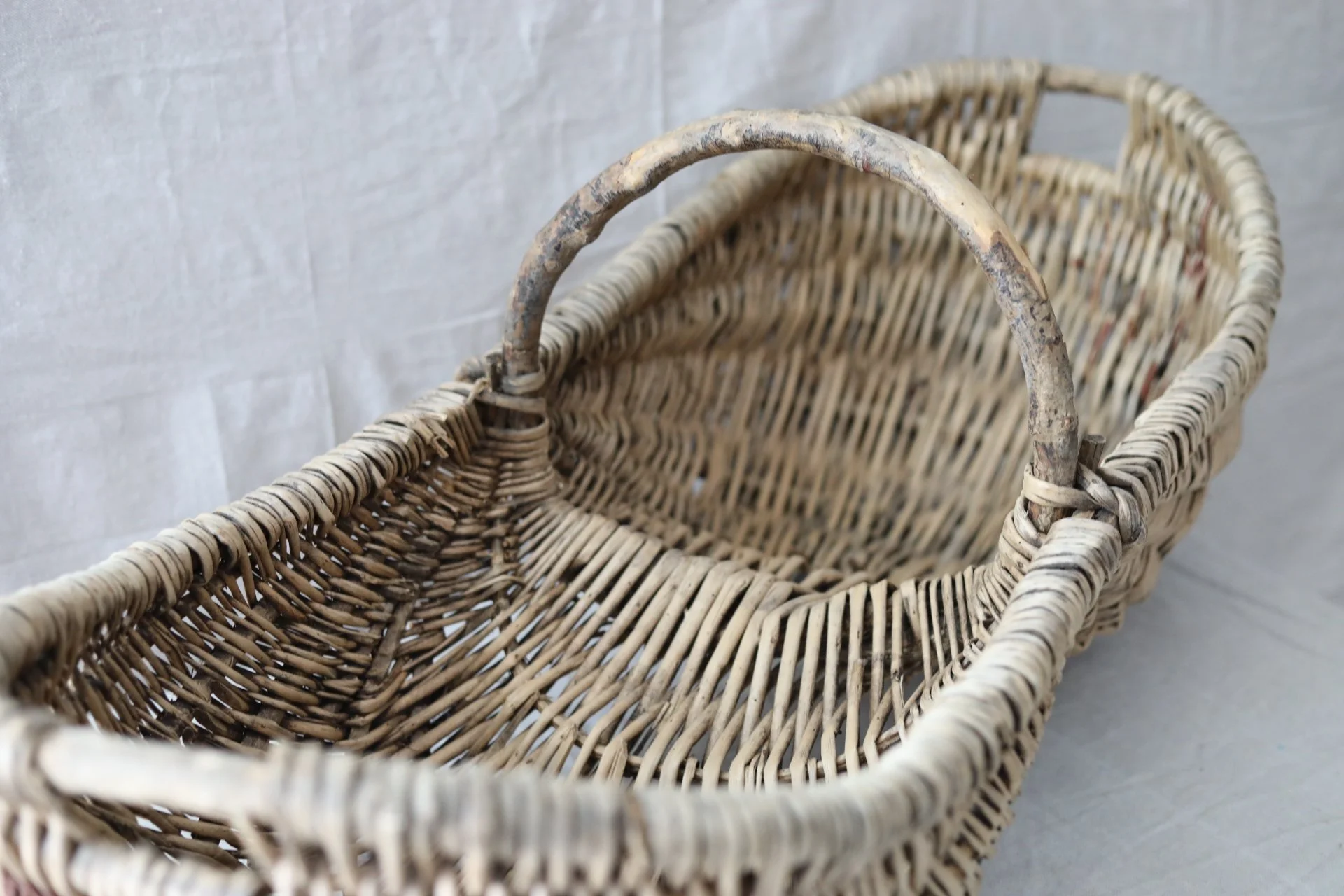
Its extraordinary humped, double-compartment form tells you exactly what it was made to do. The basket was shaped to straddle the back of a donkey or mule working through the vineyards, allowing the harvested grapes to be carried in two balanced loads on either side of the animal.
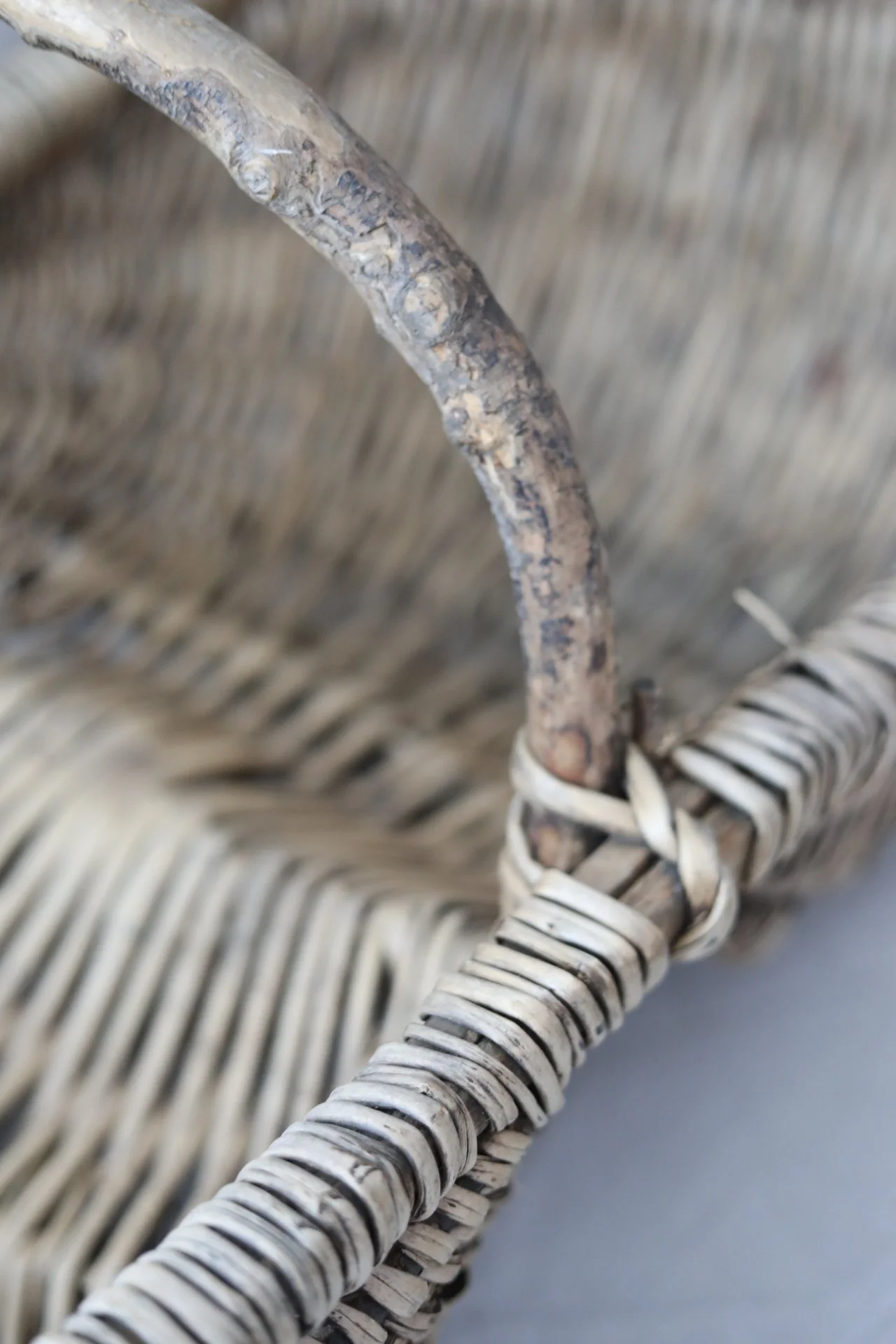
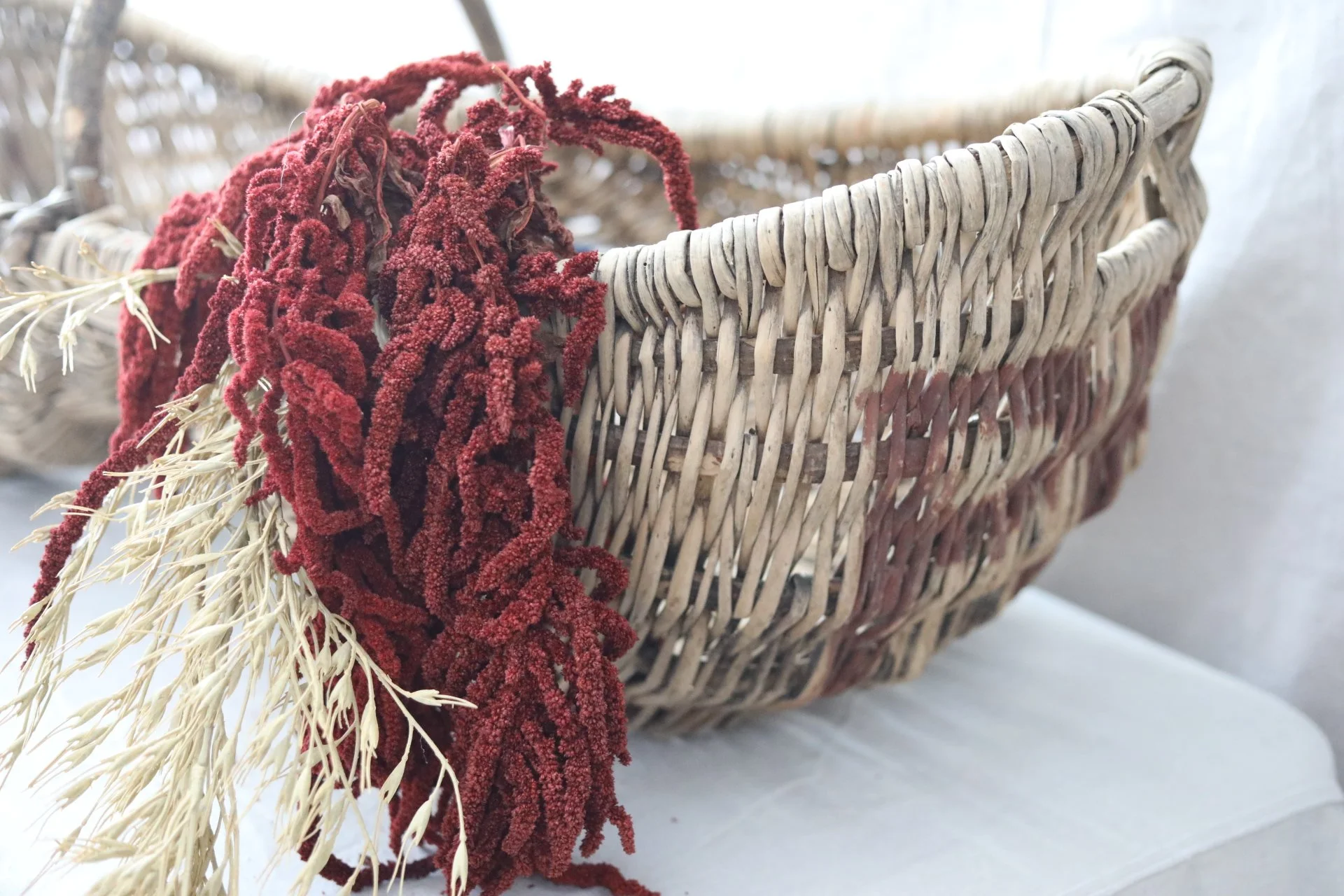
It is the sort of utilitarian object I’m always drawn to—made for work rather than decoration, and all the better for it. The willow is beautifully weathered, the old red paint comes and goes across the weave, and decades of use are written all over it.
Fill it with branches, linens or leave it completely alone. The shape is enough.